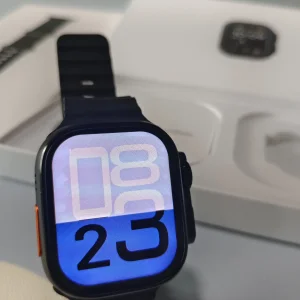
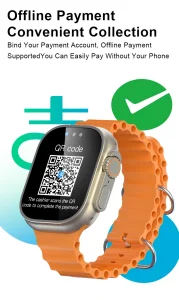
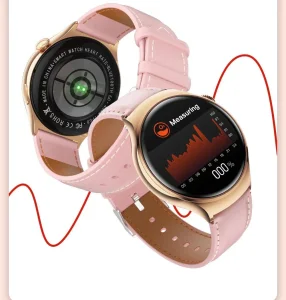
Advanced optical bio-sensors calibrated for precise cardiovascular metric logging in challenging humid environments.
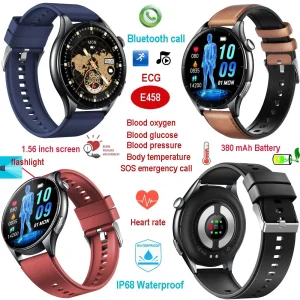
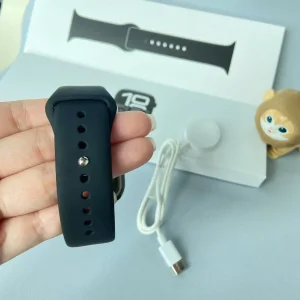
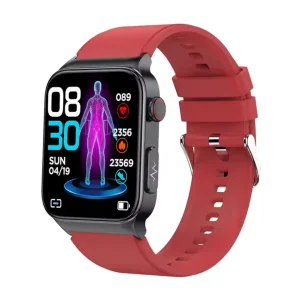
Dominica, widely recognized as the "Nature Island of the Caribbean," is actively digitizing its medical infrastructure and community health monitoring services. In response to regional challenges surrounding non-communicable diseases (NCDs) such as hypertension, diabetes, and cardiovascular complications, the Ministry of Health, Wellness, and New Health Investment has increasingly promoted preventive healthcare technologies. However, Dominica relies heavily on importing high-grade wearable diagnostics, as domestic high-tech silicon chip manufacturing or optoelectronic fabrication facilities do not exist locally on the island.
B2B importers, pharmacy chains, corporate wellness providers, and state health departments within Roseau, Portsmouth, and Marigot must source medical-grade blood pressure monitoring watches directly from top-tier research and manufacturing hubs. By partnering with advanced global factories capable of integrating multi-spectral photoplethysmography (PPG) sensors and electrocardiogram (ECG) technology, Dominican distributors can deliver robust, reliable health-tracking devices calibrated for localized tropical use cases.
"Adapting wearable health technology to Dominica's specific environment requires deep sensor calibration to prevent signal degradation caused by high humidity and varying skin pigmentation. Our technical partnerships bridge the gap between global microelectronics fabrication and localized public health initiatives."
Navigating the global procurement cycle for smart medical wearables requires a thorough understanding of custom duties, freight networks, and supply reliability. Dominica’s imports enter primarily via the deep-water port at Woodbridge Bay (Roseau) or the Douglas-Charles Airport (DOM). Because logistics routes typically involve transshipment points in Florida (USA) or neighboring Caribbean hubs like Antigua or Barbados, bulk importers require consolidated packaging that reduces volume while preventing water-damage during transit.
B2B buyers, medical distributors, and government procurement teams must establish close technical relationships with factories that offer full SDK access, allowing customized language localizations, customized branding, and custom software adjustments to suit Caribbean telecommunication bandwidths.
| Procurement Criteria | Technical Baseline Requirement | Dominica Environmental Context |
|---|---|---|
| Enclosure Protection | IP68 Waterproof rating, salt-mist resistant alloys | High relative humidity, sea-spray, tropical rainfall |
| Connectivity Standards | Bluetooth 5.2 / 4G LTE-M with fallback Bands | Flow and Digicel regional cellular networks |
| Sensor Array | PPG (Green + Red + Infrared LEDs) + ECG electrodes | Accurate tracking across diverse skin phototypes |
| Battery Life Cycle | Minimal 7-14 Days Standby (High-capacity Li-Polymer) | Resilience during local power grid fluctuations |
| Software Protocol | RESTful APIs / BLE SDK for custom health apps | Telehealth integration with clinic networks in Roseau |
Your Strategic Manufacturing Partner for High-Performance Wearable Diagnostics
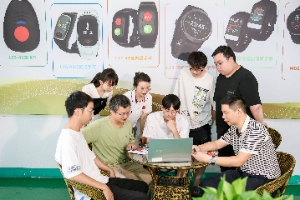
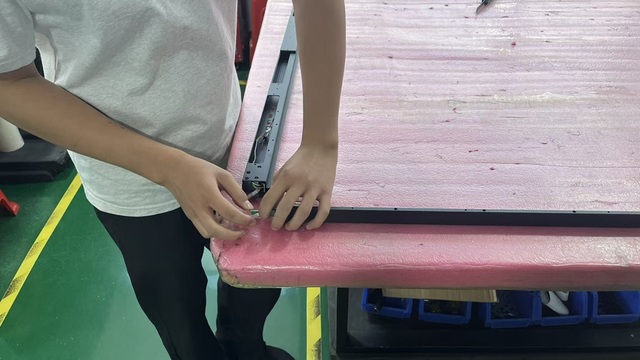
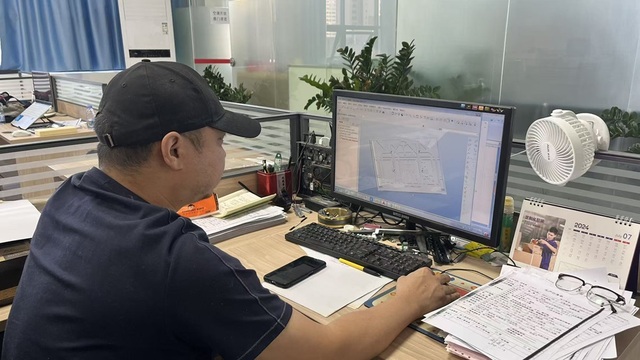
Founded in 2015, Shenzhen TC Health Co., Ltd. has become a leading manufacturer specializing in smart wearable devices. With over a decade of expertise in research and development, production, and management, we focus on delivering innovative solutions in senior health management, disease monitoring, and personal safety.
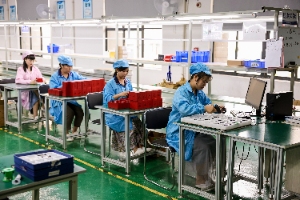
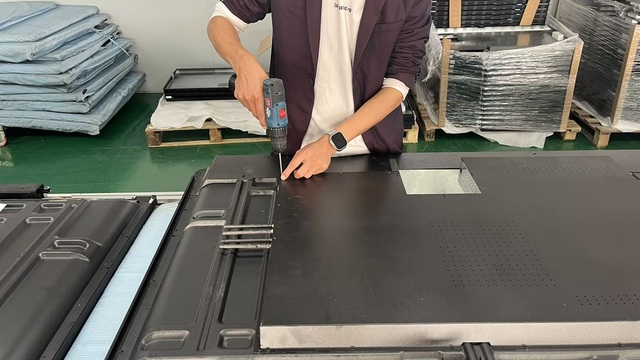
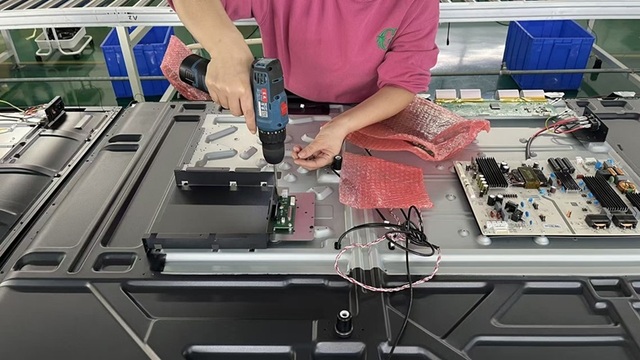
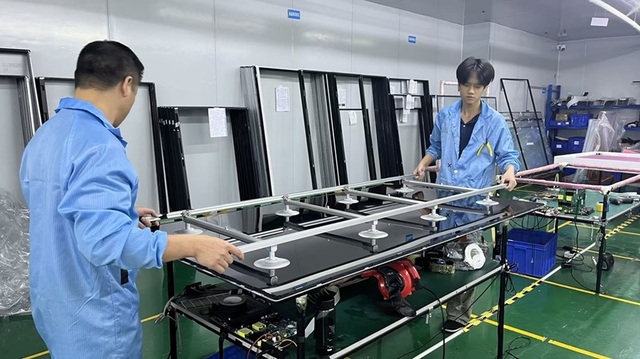
Our state-of-the-art production facility located in Shenzhen, Guangdong, China is equipped with advanced production lines and precision equipment, ensuring high-quality manufacturing standards. As an ISO9001-certified company, we maintain stringent quality control throughout the production process.
Our operational framework is designed to provide global distributors—including those in Dominica—with a seamless, vertically integrated supply chain:
We produce over 100,000 units per month, enabling us to meet the demands of global markets and urgent government projects.
Our strong partnerships with primary material suppliers ensure exceptional cost efficiency and predictable, timely delivery.
We offer comprehensive OEM/ODM services, providing tailored software modifications and brand labeling to meet specific country requirements.
We combine cutting-edge multi-spectral optical technology with expert craftsmanship to deliver robust and highly durable wearable devices.
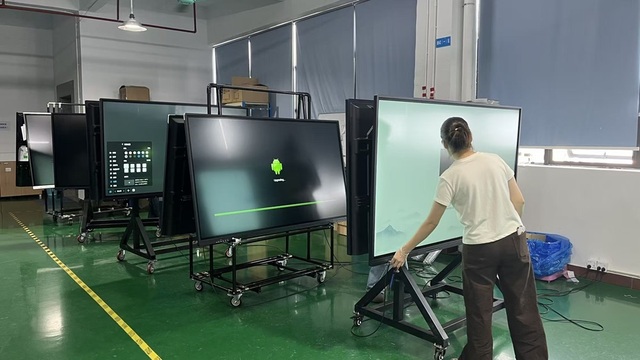
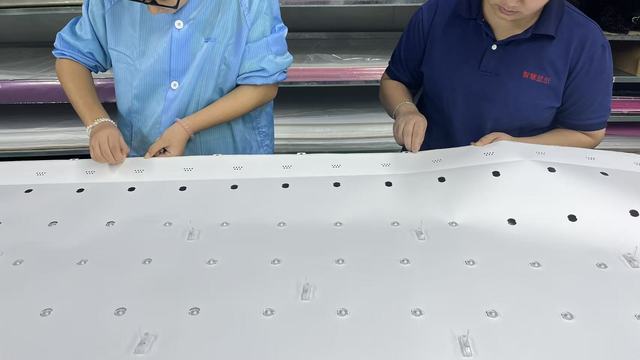
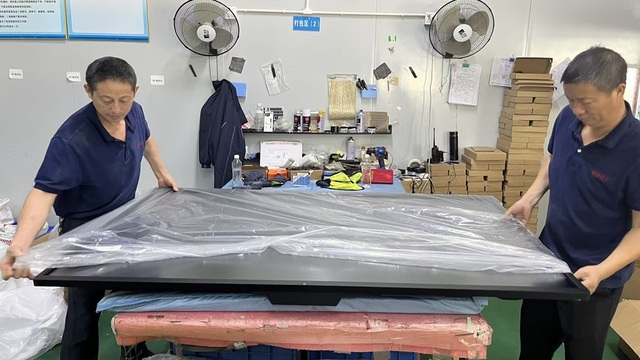
Our dust-free cleanrooms, SMT lines, and physical testing labs ensure that every blood pressure monitoring watch meets international standards before shipment.
The core of blood pressure monitoring via wearable devices relies on sophisticated photoplethysmography (PPG) sensor arrays and pulse transit time (PTT) equations. Standard consumer watches often struggle to deliver reliable measurements under dynamic conditions. Our factory-level R&D has introduced crucial algorithmic improvements that ensure high data consistency:
By employing dual-wavelength optical transmitters (combining infrared and green light sources), our wearables scan capillary volume variations at multiple tissue depths. This is critical for diverse skin phototypes, minimizing the absorption variance that frequently leads to skewed blood pressure data in conventional, single-green-light smartwatches.
Movement artifacts are the main cause of false hypertensive readings. Our devices feature 3-axis and 6-axis accelerometer telemetry synchronized with the PPG signal processing unit. The onboard microcontroller uses adaptive bandpass filters to isolate arterial pulse waveforms from hand movements, ensuring accurate readings during daily activities.
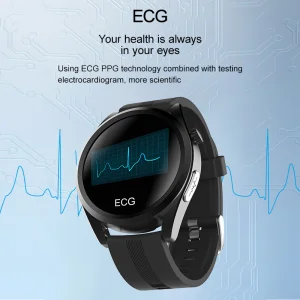
For models equipped with ECG sensors (such as the E500 and Ultra 2 variants), two physical steel contacts form a dry-electrode system that measures cardiac electrical potential. By cross-referencing ECG pulse wave timings with optical capillary peaks, our software estimates pulse transit time, providing a highly reliable tracking of systolic and diastolic variations.
For large-scale medical groups, insurance networks, and municipal clinics in Dominica, simple consumer apps are insufficient. Enterprise platforms require direct API access to maintain data privacy and system compatibility.
Our engineering team can flash customized firmware payloads that lock watches into dedicated healthcare modes. This restricts third-party app access, maximizes battery performance, and displays key health parameters prominently on the home screen for senior patients.
We supply full documentation for Android and iOS BLE (Bluetooth Low Energy) APIs. This allows Dominican software companies and health networks to feed patient data directly into local secure clouds, avoiding third-party server routing and satisfying regional data protection regulations.
For tracking senior safety via 4G devices, we integrate network modems compatible with Flow and Digicel, providing continuous GPS and vital sign telemetry across rural regions from Saint Joseph to Saint Patrick.
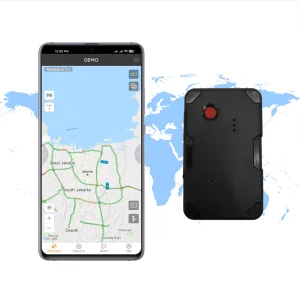
Specialty models including dual-sensor arrays, integrated Bluetooth earphone chargers, and standalone GPS trackers.
To import medical diagnostics and telemetry products into Dominica and the wider CARICOM region, manufacturers must adhere to international quality benchmarks. While the Dominica Bureau of Standards (DBOS) reviews general imports, medical hardware clearance relies on certifications from recognized international bodies:
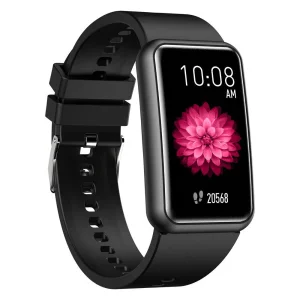
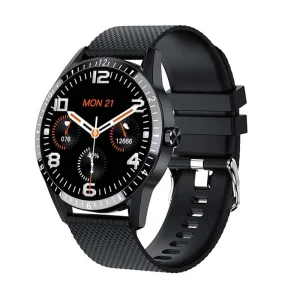
A full range of smartwatches for retail, brand-building, and senior monitoring programs in Dominica.
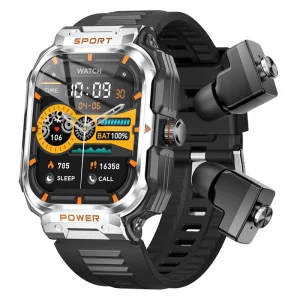
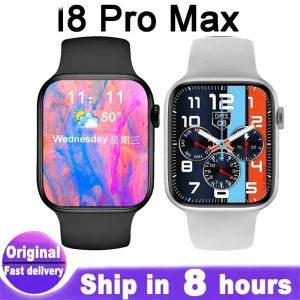
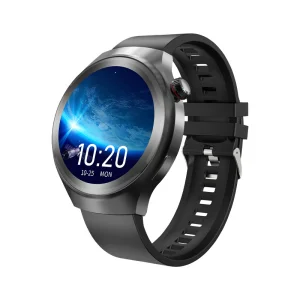
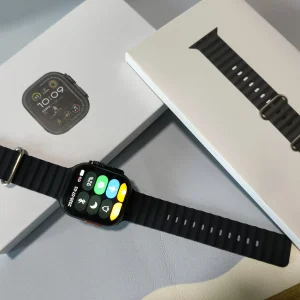
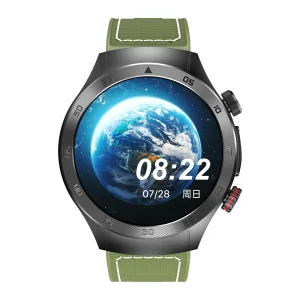
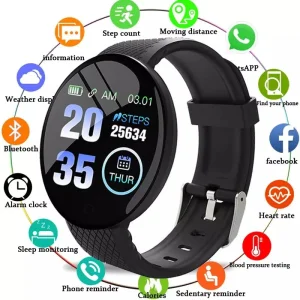
Essential guidance for B2B buyers, retailers, and medical distributors sourcing wearables for Dominica.
Contact our technical engineering team in Shenzhen to request sample kits, software documentation, and B2B pricing packages tailored for the Dominica market.
Send Inquiry Now TC Health