Choosing a monitoring device for an older adult is not simply a technology decision. It is a daily safety decision.
The CDC reports that more than one in four adults aged 65 and older falls each year. Many falls happen near beds, bathrooms, or kitchen floors. A useful device should detect danger quickly, explain what happened clearly, and support an appropriate response. It should not create constant alarms that caregivers eventually ignore.
AARP’s 2024 Tech Trends and Adults 50-Plus report shows that older adults increasingly use connected health technologies. However, adoption does not guarantee trust. Small screens, confusing setup, poor battery life, and privacy concerns can quickly undermine a promising product. The National Institute on Aging also emphasizes communication, emergency planning, and practical support in aging-related care. These needs extend beyond simple location tracking.
So, what features should caregivers look for in monitoring devices? The answer begins with reliable fall detection, two-way communication, accurate location data, customizable alerts, long battery life, simple controls, and strong privacy protection. Each feature matters most when it works together.
Laurie Orlov, founder of Aging and Health Technology Watch, has stated, “Technology is not a substitute for human care.” That warning deserves attention. A sensor cannot notice every quiet change in behavior. It cannot replace a familiar voice at the doorway.
Still, better design can reduce uncertainty. A caregiver may receive an alert while preparing dinner, then check the device’s location and speak through its speaker. That moment needs clarity, not technical confusion.
No device is perfect. Families should test real-world performance, review false alarms, and reconsider their choice as care needs change.
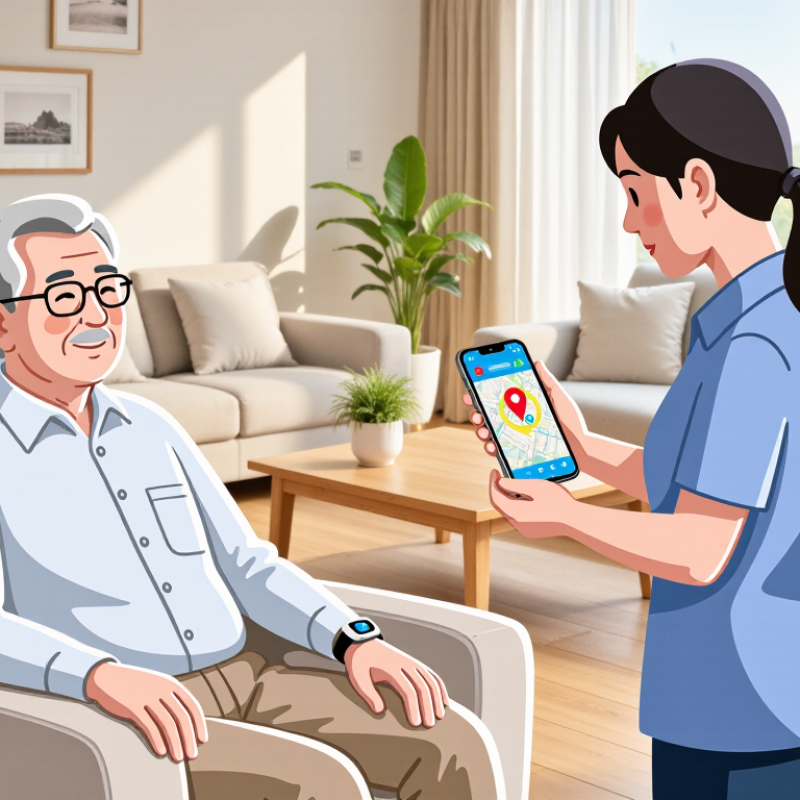
Caregiver monitoring devices are designed to track seven practical signals: location, falls, vital signs, daily activity, sleep, medication routines, and environmental risks.
Location tracking can show whether an older adult reached a clinic or left a safe area. Fall detection can send an alert after sudden movement or impact. It is not perfect. A slow collapse may go unnoticed.
Vital-sign sensors may follow heart rate, oxygen levels, temperature, or blood pressure, depending on the device. Activity tracking can reveal unusual inactivity, missed meals, or disrupted sleep.
These changes deserve human review, not automatic conclusions.
The World Health Organization estimates that more than 2.5 billion people need assistive technology worldwide, highlighting the growing need for practical monitoring support (WHO, Global Report on Assistive Technology, 2022).
Medication reminders help track scheduled doses, while environmental sensors can detect smoke, extreme temperatures, or an open door. Two-way communication is also valuable when a caregiver needs to speak calmly through the device.
Caregivers should check battery life, cellular coverage, alert accuracy, and data protection before relying on any system.
The U.S. Centers for Disease Control and Prevention reports that about one in five adults provides unpaid care, so a clear dashboard can reduce repeated phone calls and uncertain guessing.
Still, no device replaces conversation, consent, or professional assessment. Technology can flag a concern; it cannot explain every concern.
Real-time alerts are the core feature caregivers need in monitoring devices. A quiet room can hide a serious emergency. The World Health Organization reports that falls cause about 684,000 fatal injuries worldwide each year. Its evidence also identifies older adults as especially vulnerable. A reliable device should detect a fall, send an immediate notification, and show the wearer’s location.
Speed matters. The CDC reports that more than one in four older adults falls each year. After a fall, hesitation can increase fear, confusion, and medical risk. Alerts should reach caregivers through multiple channels, such as an app, text message, and automated call. Two-way voice communication adds practical value. A caregiver can ask, “Can you hear me?” while help is being arranged.
Unusual activity detection deserves equal attention. A device might notice no movement during a normal morning routine, repeated nighttime motion, or an unexpected exit. These patterns can reveal weakness, disorientation, or a developing emergency. However, algorithms are not perfect. False alarms may frustrate families and weaken trust. Settings should be adjustable, with clear event histories and easy cancellation controls. The AARP’s research on family caregiving shows how heavily relatives already depend on technology and remote support. That evidence suggests monitoring tools should reduce uncertainty, not create more digital chores. Caregivers still need training, testing, and honest expectations. Technology helps. It cannot replace human judgment.
Real-Time Alerts for Falls, Emergencies, and Unusual Activity
Falls are a major safety concern for older adults in the United States. Real-time fall detection, emergency alerts, unusual-activity monitoring, two-way communication, location sharing, reliable connectivity, and caregiver notifications can help support faster awareness and response. Figures are annual U.S. estimates reported by the CDC; values are shown in millions.
Source: U.S. Centers for Disease Control and Prevention, Older Adult Falls.
Accurate Location Tracking with Geofencing Support
Reliable location tracking helps caregivers respond faster when someone leaves a familiar area. A useful monitoring device should combine GPS, cellular signals, Wi-Fi, and nearby network data. This improves accuracy near tall buildings or inside large facilities. Still, no location system is perfect.
Geofencing adds practical protection. Caregivers can create safe zones around a home, school, workplace, or community center. When the monitored person crosses a boundary, the system can send an alert. Good devices allow flexible zones, adjustable alert delays, and clear location history. These details reduce false alarms. They also help caregivers understand movement patterns instead of reacting blindly.
Tips
Test the device in real conditions. Check it indoors, outdoors, and during travel. Review battery life before a full day away. Keep emergency contacts updated. Explain the tracking plan clearly and respect the person’s dignity. Location data should be protected, and access should stay limited to trusted caregivers. Alerts may arrive late when signals are weak. That limitation deserves honest attention.
Caregivers need monitoring devices that turn vital signs into clear, useful information. Accurate heart rate, blood pressure, oxygen saturation, temperature, and respiratory rate readings can reveal meaningful changes. The device should use clinically tested sensors and explain when readings may be unreliable. Cold fingers, movement, loose contact, or poor positioning can affect results.
Trends matter more. A single unusual reading may reflect stress, exercise, or measurement error. Repeated changes can deserve attention, especially when they appear with dizziness, confusion, unusual tiredness, or breathing difficulty. Good devices store readings with dates and times, making patterns easier to discuss with qualified healthcare professionals. Custom alerts are also valuable, but they should be adjustable. Too many alarms may create anxiety and cause caregivers to ignore important warnings.
Daily wellness measurements add useful context. Sleep duration, activity levels, resting periods, and step patterns may show whether someone is maintaining normal routines. Simple displays help older adults participate rather than feel watched. Shared access can support family members and care teams, provided consent and strong data protection are present. Long battery life and comfortable wearability matter more than impressive technical language. Keep it simple.
No device is perfect. Caregivers should confirm concerning results, repeat measurements correctly, and seek professional advice when symptoms persist. A monitoring tool supports care; it does not replace clinical judgment.
| # | Essential Feature | Health Measurements or Data | Typical Adult Reference Information | How It Helps Caregivers | Important Considerations |
|---|---|---|---|---|---|
| 1 | Continuous Vital-Sign Monitoring | Heart rate, respiratory rate, blood oxygen saturation (SpO₂), skin or body temperature, and blood pressure when supported. | Resting adult heart rate: 60–100 beats/min; respiratory rate: about 12–20 breaths/min; SpO₂ is commonly 95–100% at sea level. | Provides a baseline and may reveal meaningful changes before symptoms are obvious. | Readings vary with age, activity, altitude, illness, medications, and chronic conditions. Measurements should not replace clinical assessment. |
| 2 | Personalized Alerts and Thresholds | High or low vital-sign alerts, sustained abnormal readings, missed measurements, and symptom-triggered notifications. | Alert limits should be individualized by a qualified healthcare professional rather than based only on general population ranges. | Reduces the need for constant observation and helps prioritize follow-up or urgent review. | Alerts should include severity levels, repeat-measurement options, and clear escalation instructions to reduce alarm fatigue. |
| 3 | Fall Detection and Emergency Support | Sudden-impact and motion patterns, prolonged immobility, manual emergency calls, location sharing, and two-way communication where available. | There is no universal “normal” value; the key measure is whether a suspected fall receives a prompt response. | Can shorten the time between an incident and caregiver or emergency-service contact. | False positives and missed events are possible. The wearer should know how to cancel a false alarm and test the emergency process regularly. |
| 4 | Trend Reports and Shareable Records | Daily, weekly, and monthly averages; changes from personal baseline; measurement timestamps; symptom notes; and downloadable reports. | A sustained change from an individual’s usual pattern is often more informative than one isolated reading. | Supports informed conversations with clinicians and helps evaluate whether care plans are working. | Data should be time-stamped, easy to interpret, exportable, and protected with appropriate privacy controls. |
| 5 | Activity, Mobility, and Sedentary-Time Tracking | Steps, active minutes, walking distance, movement frequency, sedentary periods, and mobility trends. | Adults are generally advised to complete at least 150 minutes of moderate-intensity physical activity per week, when medically appropriate. | Helps identify reduced mobility, inactivity, or gradual changes that may warrant support. | Targets should reflect the person’s ability, goals, and medical advice. Step counts alone do not measure overall health. |
| 6 | Sleep and Recovery Insights | Estimated sleep duration, bedtime and wake time, nighttime awakenings, sleep regularity, and overnight heart-rate or SpO₂ trends when supported. | Most adults need at least 7 hours of sleep per night, although individual needs vary. | May highlight disrupted sleep, nighttime wandering, or changes in recovery patterns. | Consumer sleep estimates are not diagnostic. Persistent sleep problems should be discussed with a healthcare professional. |
| 7 | Medication, Hydration, and Daily-Wellness Reminders | Medication schedules, appointment reminders, hydration prompts, mood or symptom check-ins, meal notes, and adherence confirmations. | Medication timing and fluid needs are individualized; reminder systems should follow the person’s prescribed care plan. | Supports routine, documents missed tasks, and gives caregivers a clearer view of daily wellness. | A reminder does not confirm that medication was taken. Fluid guidance must account for conditions such as heart or kidney disease. |
Reference note: Ranges shown are general adult information for context, not individualized medical advice. Any urgent or concerning reading should be evaluated according to the person’s care plan and local emergency guidance.
A good monitoring device should let caregivers and older adults speak both ways. A one-way alert can create anxiety, especially when nobody knows what happened. Two-way communication supports quick reassurance after a fall, a missed medication, or unusual nighttime movement. The AARP and National Alliance for Caregiving’s 2021 report estimated that 53 million Americans provide unpaid care. Many also work full-time. Clear voice access can reduce unnecessary calls and help caregivers respond with better context.
Privacy controls matter just as much. Continuous monitoring can feel intrusive in a bedroom, bathroom, or shared home. Users should control recording, notification schedules, access permissions, and data retention. The NIST Privacy Framework recommends managing data risks through clear governance and user choice. That principle should be visible in everyday settings, not hidden inside technical menus. A physical privacy shutter or a simple microphone switch may build more trust than a long policy document.
Simple operation is essential. Buttons should be large, labels readable, and setup possible without specialist help. The CDC reports that more than 3 million older adults visit emergency departments yearly because of falls. A monitoring device cannot prevent every fall, and false alarms remain a practical problem. Still, quick communication can shorten uncertainty. I would test the device during a power interruption, weak Wi-Fi, and a stressful morning. Real homes are imperfect. Devices should be tested there too.
They can track location, falls, vital signs, activity, sleep, medication routines, and environmental risks. A device may show whether someone reached a clinic or left a safe area. It can also detect smoke, extreme temperatures, or an open door. The information needs human review.
Fall detection can identify sudden movement or impact and send an alert. It may miss a slow collapse. False alarms can also happen. Do not treat every alert as proof of an injury.
Depending on the device, sensors may measure heart rate, oxygen levels, temperature, or blood pressure. These readings can change because of movement, poor contact, or device errors. A number needs context. Professional assessment may still be necessary.
Activity tracking can reveal unusual inactivity, missed meals, or disrupted sleep. For example, no kitchen movement by lunchtime may deserve a phone call. A change does not always mean danger. People have irregular days.
Two-way communication lets caregivers speak calmly through the device. It can reduce uncertainty after a fall, missed dose, or nighttime movement. A voice may quickly confirm that someone is safe. That reassurance matters.
Users should control recording, notifications, access permissions, and data retention. A physical privacy shutter or microphone switch can help. Bedrooms and bathrooms require extra care. Continuous monitoring may feel intrusive.
Buttons should be large, labels readable, and setup possible without specialist help. A simple dashboard can reduce repeated calls and guesswork. Test it during a power outage or weak Wi-Fi. Real homes are messy.
No. A device can flag a concern, but it cannot explain every concern. Caregivers should still seek consent and maintain regular conversations. Battery life, signal coverage, and alert accuracy require checking. I might overtrust a dashboard. That would be a mistake.
Choosing the right monitoring device can make caregiving more responsive, reassuring, and manageable. These tools are designed to help caregivers track safety, activity, location, and general wellness without creating unnecessary complexity. When considering what features should caregivers look for in monitoring devices, priority should be given to real-time alerts for falls, emergencies, and unusual activity. Prompt notifications can help caregivers respond quickly when something appears out of the ordinary.
Reliable location tracking is also important, especially when geofencing can notify caregivers if a person leaves a designated area. Health measurements, such as basic vital signs and daily wellness indicators, may provide useful insight into changing needs and routines. In addition, two-way communication allows caregivers and users to stay connected when immediate conversation is needed. Strong privacy controls, clear settings, and simple operation are equally essential, ensuring that the device remains practical, respectful, and easy to use for people with different levels of technical experience.

TC Health